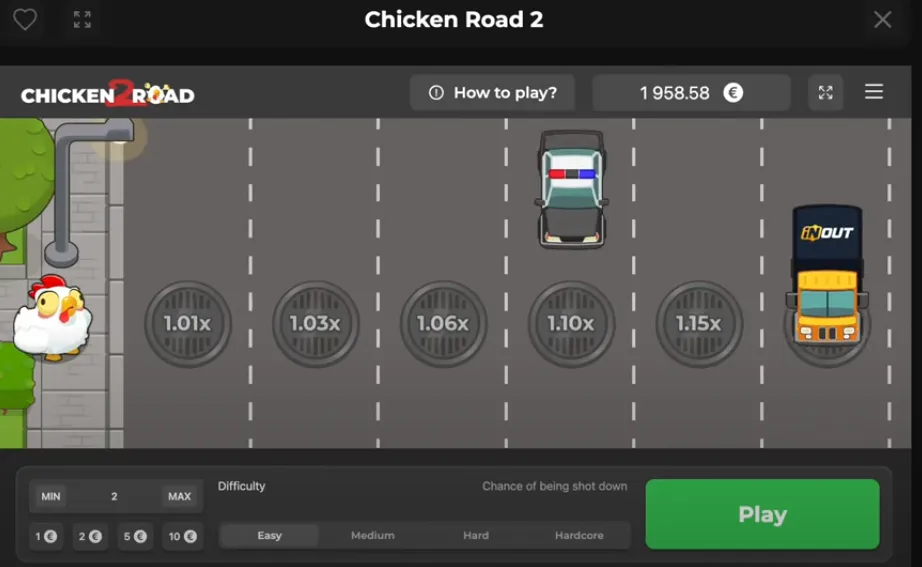

In the challenging setting of the Poultry Path match, comprehending psychological tactics can significantly improve a player’s success. By perfecting choice-making under pressure and honing bluffing skills, players can gain an edge over their rivals. Identifying nonverbal signals becomes crucial, as does the cultivation of a resilient mentality. Yet, the most effective players also integrate mindfulness practices into their approach. What continues to be explored, however, is how these components interact to influence a gamer’s ultimate execution. chicken road game
Grasping the Basics of Chicken Road
While many gamers investigate the Poultry Path match with excitement, understanding its fundamental mechanics is crucial for achievement. Each player maneuvers a set of challenges while managing restricted assets, which increases the importance of tactical planning. Mastery includes recognizing trends in opponent conduct and the setting, enabling gamers to take more informed decisions. Ideal resource allocation becomes essential; players must weigh speed, safety, and benefit as they advance. Additionally, players should recognize notable risk-benefit situations that can determine the game’s result. By completely understanding these basic elements, gamers can develop a nuanced strategy, improving their gameplay and paving the path for more complex strategies in upcoming contests. This comprehension lays the foundation for deeper mental tactics vital in challenging situations.
The Importance of Choice-Making Under Pressure
In high-stakes moments of the Chicken Road game, players must make quick decisions that can either catapult them toward victory or lead to substantial setbacks. These choices often occur under great pressure, where stress may impair judgment. The ability to judge risk versus reward quickly sets skilled players apart. They balance immediate gains against potential extended consequences, utilizing strategic foresight. Additionally, maintaining poise is vital; panic rarely results in sound decisions. Players who harness this pressure can remove distractions, focusing solely on essential indicators that determine the game’s outcome. Therefore, mastering decision-making in these critical situations not only improves player performance but also fosters a resilient mindset fundamental for handling future challenges.
Mastering the Art of Bluffing
In mastering bluffing, players must first grasp their opponents’ psychology to predict reactions. Powerful non-verbal cues play an crucial role, as slight gestures can either reinforce a bluff or expose it. Timing becomes vital; knowing when to play a powerful hand or simulate weakness can substantially shift the game’s energy.
Understanding Opponent’s Psychology
How can understanding an opponent’s mental state change one’s chances in the Chicken Road game? By accessing the complex motivations and emotive responses of opponents, players can boost their game edge. Observing conduct patterns uncovers crucial insights; for instance, identifying when an opponent tends to bluff, or when they’re likely to fold, becomes vital. Recognizing these cues allows a player to exploit weaknesses while strengthening their own approach. Additionally, gauging the opponent’s risk threshold helps in developing measured steps that can derail their game plan. When a player predicts emotional reactions, such as fear or overconfidence, they can adjust their tactics appropriately, clearing their way to triumph. Conquering this mental facet significantly augments one’s capability to outwit competitors.
Effective Non-Verbal Cues
Excelling in non-verbal indicators can significantly enhance a player’s performance in the Chicken Road game, notably when bluffing. Successful feigning is based on an astute understanding of body language and visage cues. Slight movements, such as holding consistent eye contact or a composed posture, can convey certainty, deceiving rivals about one’s actual motives. On the other hand, clues of nervousness—restlessness, evading eye contact, or abrupt changes in demeanor—can reveal a feign, causing it unsuccessful. Players often utilize sentiments; a small smile or soothing tone may mask tension, giving the appearance of ease. By studying their rivals’ responses, experienced players can modify their non-verbal cues, developing a compelling narrative that enhances their bluffing strategy. Hence, excelling in these cues becomes vital for strategic victory in Chicken Road.
Timing Your Bluffs Right
Timing is often the overlooked hero of effective bluffing in the Chicken Road game. Mastering when to release a bluff can separate the beginners from the strategists. Players must meticulously assess both the game fluidity and their opponents’ mental conditions. Bluffing too early can misfire, as opponents may not yet feel stress. Conversely, waiting too long might enable rival players to unravel one’s strategy. The optimal moment to bluff often arises when opponents show assurance or underappreciation, creating an opportunity to exploit their overconfidence. Additionally, considering the flow of previous plays can offer insight into when a bluff might produce maximum impact. Strategic timing, consequently, becomes critical for effectively outmaneuvering opponents, transforming uncertainty into advantage.
Reading Your Opponents’ Behavior

What hints can players uncover from their opponents’ actions in the Chicken Road Game? Observing body language, bets, and timing offers essential understanding into their strategies. A player who pauses before a significant wager may be unsure, indicating a potential vulnerability. Conversely, self-assured movements, swift actions, or overly aggressive betting often indicate strong hands or bold tactics. Players should also look for patterns; reliable behavior can signify a player’s strategy while variations might indicate bluffing or desperation. By analyzing these signals, one can make educated decisions, leveraging opponents’ tendencies against them. Mastering this skill not only provides a tactical edge but also improves one’s overall gameplay strategy, transforming guesses into calculated moves. Key understandings lie in perception and adaptability.
Building a Strong Mental Game
Recognizing competitors’ patterns is just one piece of the puzzle in the Chicken Road Game; bolstering a player’s psychological resilience is equally essential for success. A robust mental framework comprises self-knowledge, tenacity, and versatility. Players must foster a deep awareness of their emotional triggers, enabling them to keep calmness under pressure. Developing resilience allows individuals to rebound from setbacks, viewing challenges not as threats but as prospects for growth. Finally, versatility guarantees that players can pivot their approaches seamlessly, responding competently to an shifting game setting or unexpected moves from competitors. By refining these mental qualities, players establish a psychological upper hand that often outweighs mere tactical prowess, laying the foundation for sustained success in the demanding field of the Chicken Road Game.
Utilizing Subterfuge and Tactics
While some players count solely on forceful approaches to secure the upper hand, the skill of trickery often demonstrates more effective in the Chicken Road Game. Adept players understand that deceiving rivals can open chances and benefits. Subterfuge serves as a powerful tool when implemented adeptly.
Tactics to include deception include:
- Simulating Plans
- Misleading
- Misdirection
Ultimately, incorporating subterfuge into an individual’s strategy creates a psychological upper hand, making players formidable competitors in this complex game.
Applying Awareness and Concentration
Practicing mindfulness and concentration in the Chicken Road Game can greatly enhance a player’s performance by honing concentration techniques. By incorporating breathing exercises, players can not only alleviate anxiety but also enhance their decision-making abilities under pressure. Mindfulness encourages a heightened awareness of the game environment, enabling players to make strategic moves with greater clarity and intent.
Enhancing Concentration Techniques
To enhance concentration in the Chicken Road game, players must develop mindfulness techniques that ground their focus and increase awareness. By focusing on their mental presence, they cultivate a strategic edge over opponents. Effective strategies include:
- Visualization
- Sensory Awareness
- Routine Establishment
Integrating these mindfulness strategies not only improves concentration but places players for peak performance. Players should remember that mastery in concentration grows from consistent practice, ultimately leading to victory in the unpredictable scenery of the Chicken Road game.
Breathing Exercises Benefits
Building on the awareness techniques that improve concentration, incorporating breathing exercises can further raise a player’s mental condition. Controlled breathing amplifies oxygen flow to the brain, promoting mental clarity and emotional regulation. By focusing their focus through strategic breathing in and out, players can reduce anxiety and achieve a state of relaxed awareness. This unique blend of mindfulness and physiological control allows players to maintain heightened awareness, facilitating sharp decision-making. Moreover, the rhythmic nature of breath work creates a natural focal point during the disorderly elements of gameplay. Consequently, integrating breathing exercises into regular training not only boosts performance but also develops resilience, enabling players to navigate challenges with a composed and concentrated mindset, ultimately encouraging mastery in the Chicken Road Game.
Mindfulness in Decision-Making
How can mindfulness improve decision-making in stressful scenarios like the Chicken Road Game? By cultivating awareness and focus, mindfulness enables players to maneuver through demanding choices with greater clarity. A strategic mindset allows for improved risk evaluation and emotional regulation.
Players can utilize mindfulness techniques to improve their decision-making by:
- Centering Attention
- Emotional Regulation
- Greater Clarity
Incorporating mindfulness practices can ultimately lead to more well-considered and strategic decisions, increasing the likelihood of success in the unpredictable factors of the Chicken Road Game.
Conclusion
In summary, achievement in the Chicken Road game hinges on a gamer’s ability to incorporate psychological tactics into their method. By mastering decision-making under pressure, honing bluffing skills, and reading adversaries’ actions, players can gain a vital edge. Developing a strong mentality through awareness further improves focus and emotional regulation, creating a strategic benefit in disorderly situations. Ultimately, those who skillfully blend these components are poised to thrive in the intensely competitive UK video game scene.